Mini Mart Survivors / Developer story
Why a convenience store night shift?
Based on an interview with Jay, CEO of Geek Haus.
One clerk, one lit-up store
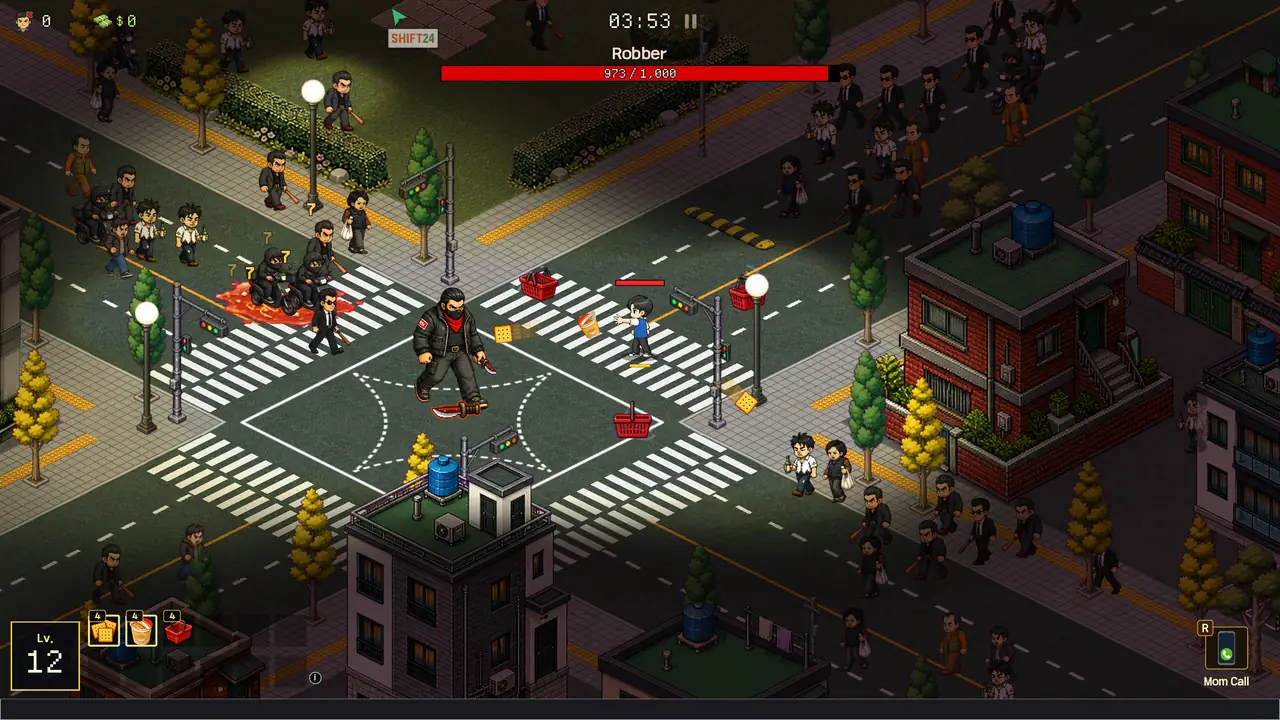
The idea began with a familiar sight: a convenience store at two or three in the morning, with one clerk behind the counter while the rest of the city slept. To the team, that scene already looked like a survival game. The steady stream of strange late-night customers suggested the repeated waves of a survivors-like.
The shelves became the arsenal. Cup noodles, snacks, coffee and other everyday products belong to the same place as the clerk. Fighting with them keeps the convenience store at the centre of the action, rather than using it only as a backdrop.
Surviving more than the customers
The title also refers to the protagonist trying to get by under the weight of unemployment and debt. The job is dangerous, but the pay keeps bringing the clerk back. Geek Haus wanted to put that tension into a familiar setting, using black comedy and social satire.
In the full game, wages connect combat to decisions between shifts: put money toward debt or invest in the next shift. The game leaves players room to decide what they want from the job, without presenting one choice as the answer for everyone.
A story that does not stop the action
The team set a rule: the story should not hold the player up. Notes left by bosses, office records and a previous clerk's belongings offer clues for players who want to investigate. Reading them is optional.
This lets the combat and the mystery share the same game. You can focus on building weapons and surviving the shift, or pay attention to the details waiting between fights. The full game develops that mystery across six branches; the free demo introduces the Seoul branch.